Whether you are a small business owner, e-commerce seller, or logistics manager, if you choose the wrong container, it can lead to damaged goods, missed deadlines, and wasted budget.
That’s why we have made this guide to help you narrow down your options when looking for the right container and avoid mismatched specs, awkward loading, or unnecessary upgrades.
In this blog, we will explore all the main types of shipping freight containers, what they are used for, and how to pick the right one for your cargo. Here you will learn about:
- The most common container types and their key uses
- Which type suits bulky, fragile, temperature-sensitive, or oversized cargo
- Practical questions to ask before you commit to a container type or size
How to Choose the Right Freight Container Type
Even before we get into the different types of freight containers, it will be helpful for you if you have answers to most of the following questions:
- What is the primary function of the container going to be?
- Does the cargo need strict temperature control?
- Does the cargo have an irregular shape, is it oversized or extra tall?
- Are the goods hazardous, fragile, or of high-value?
- What are the exact size, weight, and shape limits of the payload?
- How will items enter and exit the container?
- Can a delivery truck or crane physically access the final site?
- What are the local building codes, zoning laws, or port rules?
- What is the total budget, including delivery, modifications, and setup?
Your answers will help narrow down the options for the most suitable container type.
What Are the Different Types of Freight Containers?
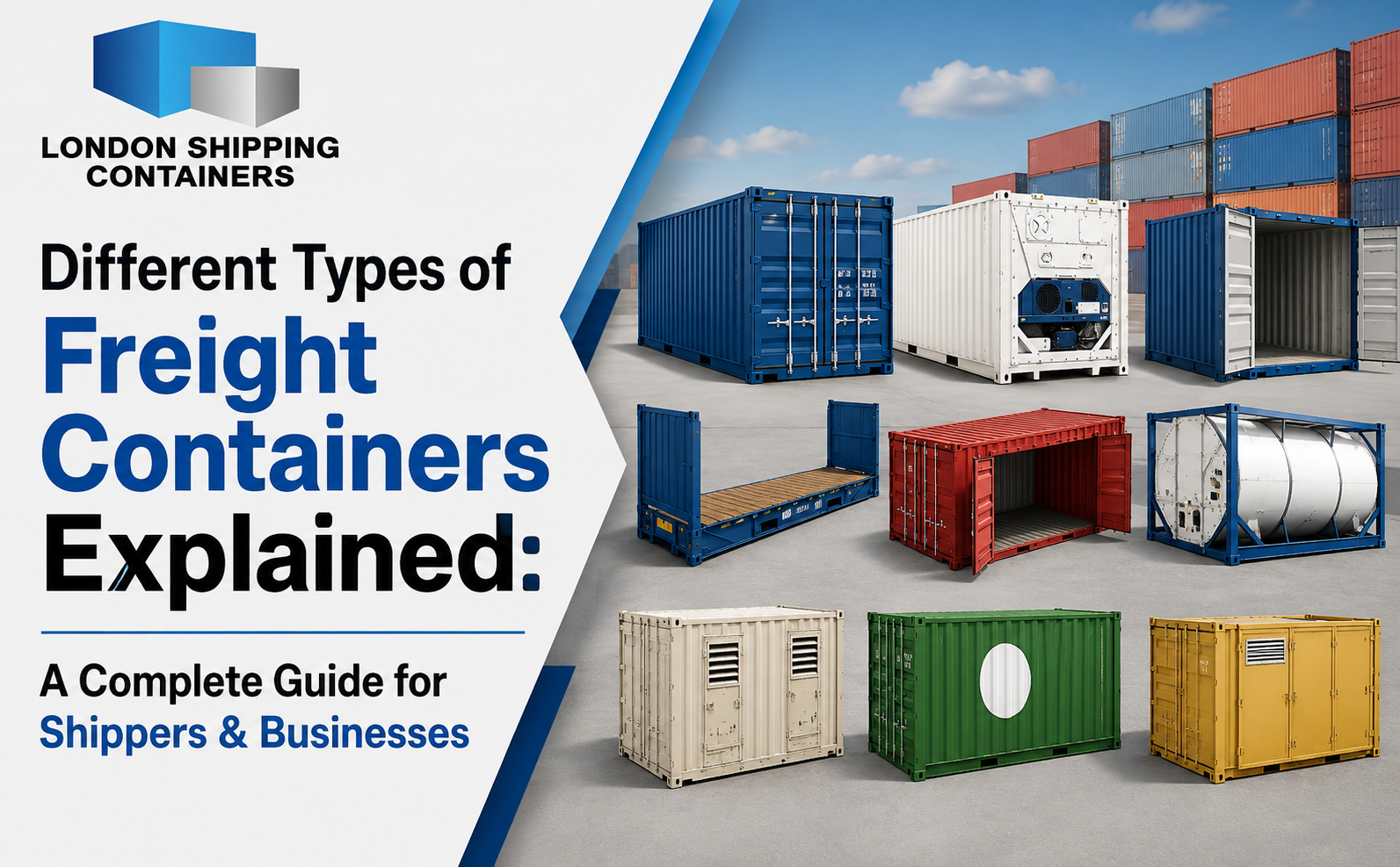
These are some of the most common types of freight containers you will find in the market:
1. Standard Dry Freight Containers
Standard dry containers are the most common shipping freight containers in the world. They feature solid steel walls, a secure roof, and double cargo doors at one end.
Common Sizes:
- 10ft containers
- 20ft containers
- 40ft containers
Best Uses:
- General freight transportation
- Business inventory storage
- Building material storage
- Tool and equipment storage
- Household storage
Advantages:
- Most affordable option
- Widely available
- Strong security
- Weather-resistant design
- Suitable for transport and storage
In the UK, standard 20 ft and 40 ft dry containers are widely used for imports, exports, and on‑site storage.
2. High Cube Freight Containers
A high cube freight container is similar to a standard container but offers additional internal height. Typically, these containers provide approximately one extra foot of headroom.
Best For:
- Bulky equipment
- Tall inventory
- Warehouse overflow storage
- Container offices
- Conversion projects
Advantages:
- Greater internal volume
- More flexibility for storage
- Less cramped when converted
- Better space efficiency
If height restrictions affect your project, a high cube container may provide better value than a standard unit.
3. Refrigerated Freight Containers (Reefers)
Refrigerated freight containers, well known as reefers, have built-in cooling systems to keep products within a specified temperature range.
Best Uses:
- Food storage
- Frozen products
- Pharmaceuticals
- Medical supplies
- Agricultural products
Advantages:
- Temperature control
- Product protection
- Suitable for long-distance transport
- Consistent storage conditions
Businesses that handle perishable goods often rely on refrigerated containers to maintain product quality throughout transport and storage.
4. Side Opening Freight Containers
A side-opening container includes full-length doors along one side of the unit. This design provides significantly easier access than traditional end-opening containers.
Best For:
- Storing long equipment
- Palletised goods storage
- Keeping retail stock
- Machinery storage
- Workshop conversions
Advantages:
- Easier loading and unloading
- Improved access to stored goods
- Better organisation
- Convenient for frequent use
If you regularly access stored items, a side-opening container can save considerable time and effort.
5. Open Top Freight Containers
Open top containers replace the fixed steel roof with a removable cover. This design allows cargo to enter from above.
Best Uses:
- Large machinery storage
- Storing industrial equipment
- Storing construction materials
- Oversized cargo storage
- Tall freight storage or transport
Advantages:
- Crane loading capability
- Accommodation of oversized items
- Flexible loading options
- Suitable for unusual cargo dimensions
Many industries use open-top containers if traditional container doors create loading restrictions.
6. Flat Rack Freight Containers
Flat rack containers remove the side walls entirely and often feature collapsible end walls. This creates an open platform for transporting large cargo.
Best Uses:
- Storing vehicles
- Heavy machinery storage
- Construction equipment storage
- Storing industrial components
- Large engineering projects
Advantages:
- Suitable for oversized cargo
- Easy loading from multiple directions
- High weight capacity
- Flexible securing options
Businesses transporting unusually large equipment often choose flat rack containers because standard containers simply cannot accommodate the load.
7. Tunnel (Double Door) Containers
Tunnel containers provide doors at both ends and create a straight passage through the container.
Best Uses:
- Fast loading operations
- Distribution centres
- Construction sites
- Warehousing applications
Advantages:
- Dual access points
- Faster loading and unloading
- Improved accessibility
- Better workflow efficiency
Speed and accessibility are often the plus points of tunnel containers in specific situations.
8. Insulated Freight Containers
Insulated containers contain thermal protection within the walls, roof, and floor. Unlike refrigerated units, they do not actively cool the contents but reduce heat transfer.
Best Uses:
- Storing temperature-sensitive products
- Equipment protection
- Chemical storage
- Food storage
Advantages:
- Temperature stability
- Reduced condensation
- Lower energy requirements
- Protection from extreme temperatures
Insulated containers provide an effective solution when active refrigeration is unnecessary.
9. Offshore Freight Containers
Offshore containers support operations in demanding environments such as oil platforms and marine projects.
Manufacturers build them to withstand extreme conditions and heavy lifting.
Best Uses:
- Offshore energy projects
- Marine operations
- Industrial environments
- Specialist logistics
Advantages:
- Enhanced structural strength
- Increased safety standards
- High durability
- Heavy-duty performance
Most will never need offshore containers, but they are one of the essentials within specialist industries.
10. Modified Freight Containers
Many businesses choose modified containers instead of purchasing traditional buildings. Container modifications can transform a basic steel box into a practical workspace.
Popular Modifications:
- Personnel doors
- Windows
- Electrical installations
- Lighting systems
- Insulation
- Ventilation
- Internal partitions
- Roller shutters
Common Applications:
- Site offices
- Workshops
- Retail units
- Cafés
- Welfare units
- Studios
- Storage facilities
The flexibility of modified containers explains why container conversions continue to grow in popularity.
Note: This list is an overview for freight containers. If you are looking for precise specifications, weight limits, and local regulations, connect with us at London Shipping Containers.
Why London Shipping Containers Could be the Right Choice
At London Shipping Containers, we supply a wide range of shipping freight containers for commercial and domestic uses.
We offer:
- New and used containers
- 8ft, 10ft, 20ft, 30ft, and 40ft size options
- Standard and specialist container types
- Expert advice before purchase
- Flexible hire and purchase options
- Fast delivery across London and the UK
- Bespoke modification services
Whether you need secure storage, freight transportation, or a custom conversion, contact our team to get expert advice.