What to Check Before You Buy a Used Shipping Container in the UK

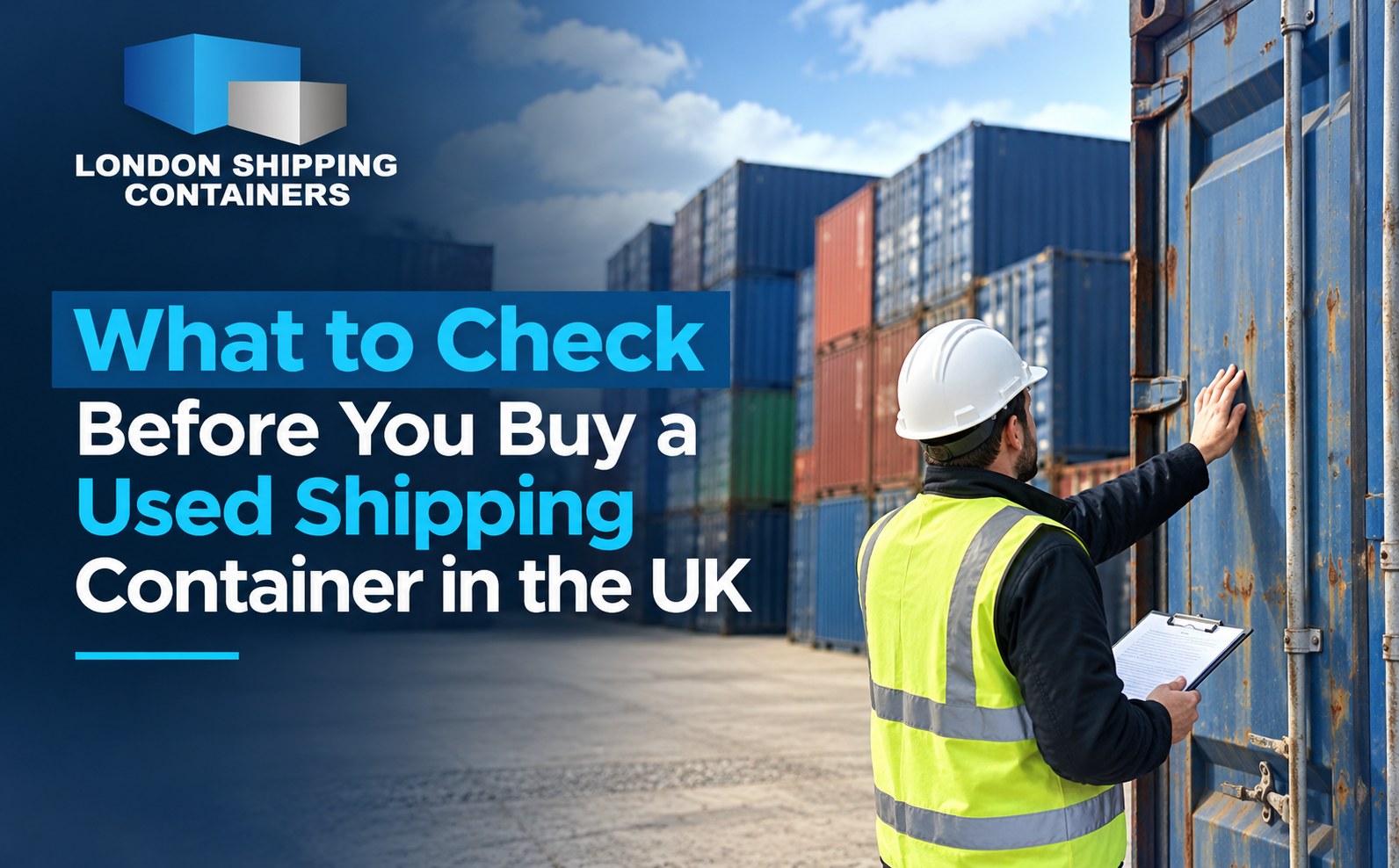
What to Check Before You Buy a Used Shipping Container in the UK

Buying a second-hand container offers many benefits for budget-conscious buyers, small business owners, contractors, and DIY builders. It offers business owners durable, weatherproof on-site storage or modular structures without having to pay for a brand-new unit. This is the good part, but there are risks as well. Not all pre-owned containers offer the same value or service. A good second-hand shipping container should have sound structural integrity, be weatherproof, and be delivered as quickly as possible. Sometimes business owners might be tempted to buy the cheapest container available, but hidden problems can quickly turn a budget-friendly purchase into an expensive mistake.

That is exactly why you need to look past the appearances and focus on factors that really matter before you buy shipping containers in UK. Damaged doors, lack of security features, poor quality, and poor structural integrity can cause serious issues later on after you’ve bought the container. This means that the process of choosing durable used shipping containers starts with a careful review of the unit’s real condition, not just the seller’s description. Your primary aim should be to find a used shipping container that can still perform reliably in the environment where it will be placed and used over time.

The Top Five Benefits of Buying Used Shipping Containers in the UK

Buying a used shipping container can be a practical and cost-effective choice for businesses, tradespeople, and individuals across the UK. The advantages of using second-hand shipping containers are as follows:

1.   More Affordable

The biggest plus point of buying a used shipping container is its cost-effectiveness. In the UK, a brand new shipping container generally costs between £1,900 and £4,500 + VAT, whereas a used shipping container costs somewhere between £850 and £2,000 + VAT.

2.   Lower Maintenance Costs

Used containers, particularly refurbished ones, are usually inspected and checked for potential problems before being sold. This means you’re more likely to receive a container that is in good condition and requires fewer immediate repairs. When you consider the ongoing maintenance costs alongside the initial purchase price, a used container can offer better long-term value for money.

3.   Recycling and Reducing Carbon Footprint

Giving a used container a new purpose supports the principles of reuse and recycling. Since shipping containers are built to last for many years, reusing them can help reduce industrial waste and the carbon emissions associated with manufacturing new units. Repurposing an existing container also keeps it out of the waste stream, making it a more environmentally conscious choice.

4.   Promoting Sustainability

Sustainability is more than just a buzzword. It is an important consideration for individuals and businesses in recent times. Used containers provide a practical way to reuse existing resources, with applications ranging from homes and pop-up shops to offices and commercial spaces. Choosing a used container helps support the circular economy and contributes to a more sustainable, environmentally conscious future.

5.   Quality Inspection Processes

Reputable suppliers inspect used containers before sale to identify damage and assess their overall condition. This process helps identify any damage or issues that may need attention before the container reaches the buyer. This thorough inspection gives buyers greater confidence that the container is suitable for its intended use and ready for a new purpose.

Factors to Consider Before Buying Second-Hand Shipping Containers in the UK

Buying a second-hand shipping container is a significant long-term investment. The problem that many business owners face while choosing a pre-owned shipping container is the availability of too many options. So, they generally make the mistake of choosing the container with the lowest price tag. This proves to be problematic in the future. Poor structural integrity, bad weatherproofing, lack of proper security features, etc., lead to goods being damaged or stolen. So, having a checklist of factors to consider before buying a second-hand shipping container is important. These are the most important points to consider before you buy a second-hand shipping container:

1.   Purpose of the Container

Your plans for the container will decide the size of the container. So, before buying a shipping container, you must factor in how much available space you require. This includes your space restraints, the volume of items you plan to store, and whether you need extra height. The most common shipping container sizes in the UK are as follows:

  1. 8 ft or 10 ft containers: Best option if you have limited storage space and only a few items to store.
  2. 20 ft containers: Perfect if you’re looking for a general storage option, decluttering or downsizing.
  3. 40 ft containers: Ideal for larger projects or if you need more space.
  4. 20 ft or 40 ft double door containers: If you need to access the container from both ends, then the tunnel container is the best option for you.
  5. Multi-compartment containers: These containers come in handy if you work with multiple different contractors or customers needing their own small space.

2. Condition of the Container

Second-hand containers come in various conditions based on how long they have been in use. Based on their usage and condition, the containers are graded:

  1. New or one trip: One-trip containers are new. They have just made one trip from the manufacturer overseas to the UK.
  2. Near new: As the name suggests, near-new containers are almost as good as new containers. Generally, near-new containers are ex-rental containers. They are perfect for light storage in the UK.
  3. Cargo worthy: Though used longer than one trip and near-new containers, cargo worthy containers are still a good option if you’re looking for a structurally sound and watertight container.
  4. Wind and watertight: These containers have typically had a life at sea, so they may be more weathered than the above options. But they are still structurally sound, and their wind and watertight capabilities make them ideal for storage.

3. Total Costs

The cost of purchasing and getting it delivered is also a key consideration. Costs associated with purchasing a used shipping container include the following:

  1. Delivery: The cost of delivery depends directly on the size of the container you’re ordering. This is because larger containers require larger delivery trucks. Units 20 ft and under in size will typically be delivered on a rigid vehicle. Anything above 20 ft (e.g., more than 1 x 20 ft or 1 x 40 ft) will be delivered on an artic vehicle.
  2. Modifications: Alterations are another factor that affects the price of the container. Extra modifications, such as adding doors, windows, or insulation, spike the overall cost of the used shipping container.
  3. Permissions: Depending on your location, you might have to pay for planning permission or other approvals from your local authority. Take this amount into consideration when assessing the overall cost.

4.   Access and Placement

Access, or where you’ll place your container, is another important consideration you must think about before you buy the container. The last thing you would want is to make the purchase and then realise that you don’t have enough space to get it into the location you want. So, before making the purchase decision, ensure that you have:

  1. Enough space for the unit
  2. Enough space for the delivery vehicle
  3. A clear area for offloading
  4. Proper foundation for the container to be placed

5.   Security Features

Planning to store valuables inside the container? Then security must be your first concern. Additional security features, such as those mentioned below, can increase the overall cost:

  1. Padlocks: It’s the first layer, basic protection against break-ins.
  2. Lockboxes: These are used to protect the container’s padlocks from being tampered with.
  3. Alarm systems or CCTV: If you’re storing valuable items, consider installing an alarm or CCTV.

6. Research Reputable Suppliers

Buying second-hand shipping containers from reputable shipping container companies in UK is the safest option. Try finding a company with a solid reputation, positive reviews, and experience in the industry. At the same time, avoid buying from private sellers.

7. Check the Structural Integrity of the Shipping Container

Make sure to check that your second-hand shipping container does not have leaks or any other structural flaws. Also look for any signs of damage or corrosion, as it could affect the container’s functionality. It’s also a good idea to make sure the container meets your standards for security and durability.

8. Check Certifications

If you plan to ship your container overseas, make sure it meets the necessary certification standards. Ensure that your used shipping container has the documents fit for its purpose, such as:

  • A valid CSC (Convention for Safe Containers)
  • ACEP (Approved Continuous Examination Programme)
  • ISO Certification
  • I.R. Certification
  • IMDG Code or Container Packing Certificate

9 . Trust the Experts

When you’re unsure, don’t hesitate to seek advice from industry experts. A reputable supplier can guide you through the buying process, answer your questions, and help you choose a shipping container that best suits your needs.

Ready to Buy a Shipping Container in UK? Get Your Free Quote Today

If you’re looking to buy a shipping container in UK, we make it simple at London Shipping Containers. As one of the established shipping container companies in UK, we supply fully inspected, certified units. Options range from 8 ft to 40 ft. We also offer fast, reliable delivery across London and the South East.

Need used shipping containers in London? We can help with storage, customisation, and full conversion projects. Our team can guide you through condition grades and sizing. We can also explain delivery logistics before you commit.

Browse our current stock of London shipping containers for sale. Or get in touch today for a free, no-obligation quote. Get a container you can actually rely on.

Before You Go

Buying a used shipping container doesn’t have to be a gamble. Check the condition grade and inspect the structural integrity and confirm all certifications before you buy. Choose a supplier who’s transparent about everything. This helps you get a unit that works for years, rather than one that costs you twice.

The businesses and tradespeople who get the best value don’t always chase the lowest price tag. Instead, they ask the right questions before they buy.

FAQs

  1. What’s the difference between “cargo worthy” and “wind and watertight” containers?

A: Cargo worthy containers are structurally sound and still certified for international shipping, so they tend to be in better overall condition. Wind and watertight (WWT) units have usually had a longer life at sea and may show more wear, but they’re still fully weatherproof, making them a good, budget-friendly choice for storage rather than shipping.

  1. Is it cheaper to buy or hire a used shipping container in the UK?

A: Buying works out cheaper if you need the container long-term (generally more than 6–12 months), since hire costs add up over time. If you only need one for a short term or aren’t sure yet, hiring gives you flexibility without the upfront cost of buying a shipping container in UK.

  1. Do I need planning permission to place a used shipping container on my land?

A: It depends on how you’re using it and where it’s sited. Temporary storage on commercial or construction land usually doesn’t need permission, but permanent placement, residential use, or conversions often do. Check with your local authority before delivery is booked.

  1. How long does a used shipping container typically last?

A: A well-maintained used container, especially the ones that are cargo-worthy or near-new grade, can last 15–25 years or more. Lifespan depends on the container’s history, how it’s stored, and whether it’s kept off bare ground on a proper foundation.

  1. What certifications should I check before buying a used container in the UK?

A: Look for a valid CSC (Convention for Safe Containers) plate, evidence of compliance with the relevant ISO standards. If you’re shipping internationally rather than just using it for storage, ask about ACEP, T.I.R., and IMDG Code certification too.


Diffrent Types of Freight Containers

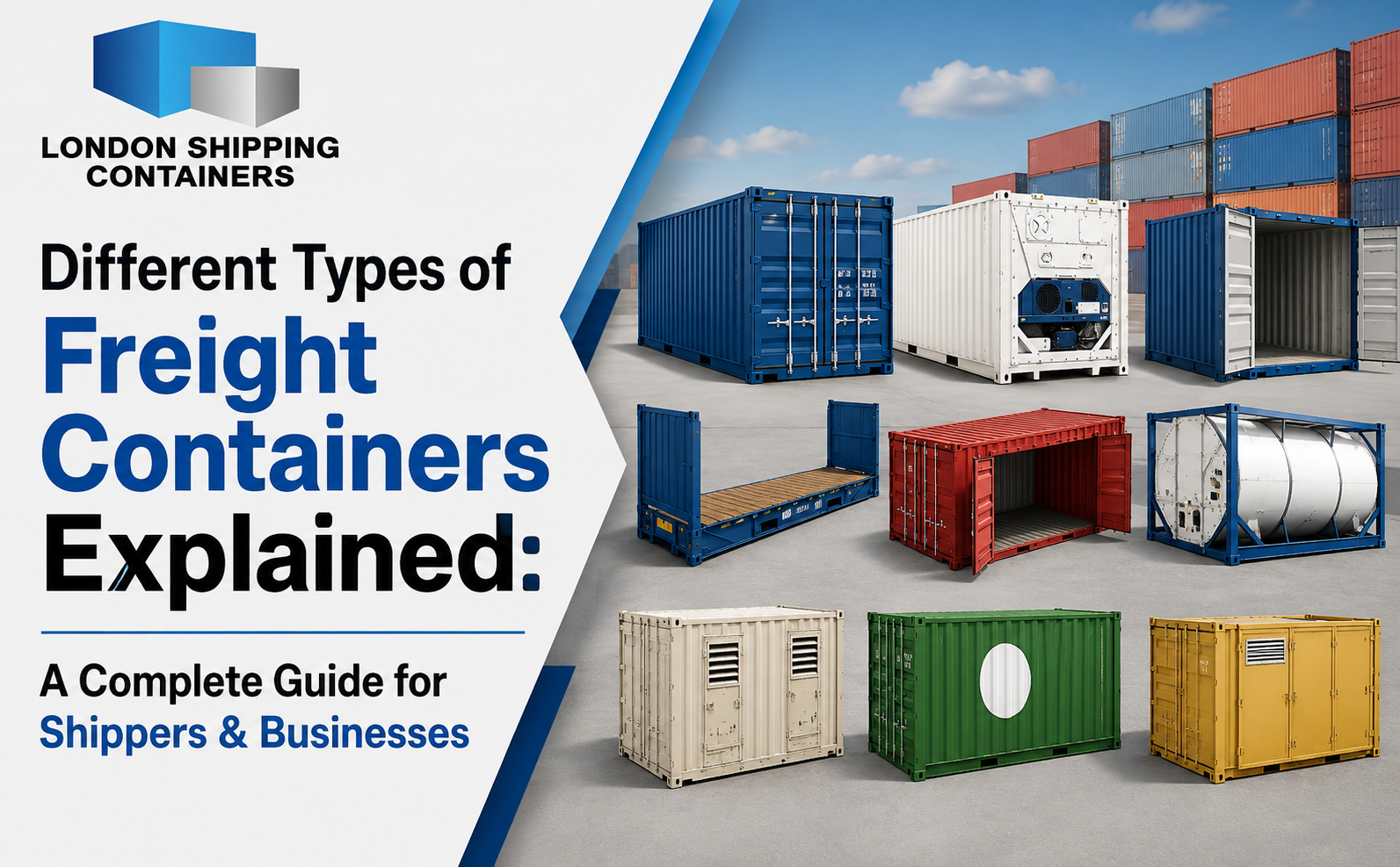
Different Types of Freight Containers Explained: A Complete Guide for Shippers & Businesses

Whether you are a small business owner, e-commerce seller, or logistics manager, if you choose the wrong container, it can lead to damaged goods, missed deadlines, and wasted budget.

That’s why we have made this guide to help you narrow down your options when looking for the right container and avoid mismatched specs, awkward loading, or unnecessary upgrades.

In this blog, we will explore all the main types of shipping freight containers, what they are used for, and how to pick the right one for your cargo. Here you will learn about:

  • The most common container types and their key uses
  • Which type suits bulky, fragile, temperature-sensitive, or oversized cargo
  • Practical questions to ask before you commit to a container type or size

How to Choose the Right Freight Container Type

Even before we get into the different types of freight containers, it will be helpful for you if you have answers to most of the following questions:

  1. What is the primary function of the container going to be?
  2. Does the cargo need strict temperature control?
  3. Does the cargo have an irregular shape, is it oversized or extra tall?
  4. Are the goods hazardous, fragile, or of high-value?
  5. What are the exact size, weight, and shape limits of the payload?
  6. How will items enter and exit the container?
  7. Can a delivery truck or crane physically access the final site?
  8. What are the local building codes, zoning laws, or port rules?
  9. What is the total budget, including delivery, modifications, and setup?

Your answers will help narrow down the options for the most suitable container type.

What Are the Different Types of Freight Containers?

These are some of the most common types of freight containers you will find in the market:

1.    Standard Dry Freight Containers

Standard dry containers are the most common shipping freight containers in the world. They feature solid steel walls, a secure roof, and double cargo doors at one end.

Common Sizes:

  • 10ft containers
  • 20ft containers
  • 40ft containers

Best Uses:

  • General freight transportation
  • Business inventory storage
  • Building material storage
  • Tool and equipment storage
  • Household storage

Advantages:

  • Most affordable option
  • Widely available
  • Strong security
  • Weather-resistant design
  • Suitable for transport and storage

In the UK, standard 20 ft and 40 ft dry containers are widely used for imports, exports, and on‑site storage.

2.   High Cube Freight Containers

A high cube freight container is similar to a standard container but offers additional internal height. Typically, these containers provide approximately one extra foot of headroom.

Best For:

  • Bulky equipment
  • Tall inventory
  • Warehouse overflow storage
  • Container offices
  • Conversion projects

Advantages:

  • Greater internal volume
  • More flexibility for storage
  • Less cramped when converted
  • Better space efficiency

If height restrictions affect your project, a high cube container may provide better value than a standard unit.

3.    Refrigerated Freight Containers (Reefers)

Refrigerated freight containers, well known as reefers, have built-in cooling systems to keep products within a specified temperature range.

Best Uses:

  • Food storage
  • Frozen products
  • Pharmaceuticals
  • Medical supplies
  • Agricultural products

Advantages:

  • Temperature control
  • Product protection
  • Suitable for long-distance transport
  • Consistent storage conditions

Businesses that handle perishable goods often rely on refrigerated containers to maintain product quality throughout transport and storage.

4.    Side Opening Freight Containers

A side-opening container includes full-length doors along one side of the unit. This design provides significantly easier access than traditional end-opening containers.

Best For:

  • Storing long equipment
  • Palletised goods storage
  • Keeping retail stock
  • Machinery storage
  • Workshop conversions

Advantages:

  • Easier loading and unloading
  • Improved access to stored goods
  • Better organisation
  • Convenient for frequent use

If you regularly access stored items, a side-opening container can save considerable time and effort.

5.    Open Top Freight Containers

Open top containers replace the fixed steel roof with a removable cover. This design allows cargo to enter from above.

Best Uses:

  • Large machinery storage
  • Storing industrial equipment
  • Storing construction materials
  • Oversized cargo storage
  • Tall freight storage or transport

Advantages:

  • Crane loading capability
  • Accommodation of oversized items
  • Flexible loading options
  • Suitable for unusual cargo dimensions

Many industries use open-top containers if traditional container doors create loading restrictions.

6.    Flat Rack Freight Containers

Flat rack containers remove the side walls entirely and often feature collapsible end walls. This creates an open platform for transporting large cargo.

Best Uses:

  • Storing vehicles
  • Heavy machinery storage
  • Construction equipment storage
  • Storing industrial components
  • Large engineering projects

Advantages:

  • Suitable for oversized cargo
  • Easy loading from multiple directions
  • High weight capacity
  • Flexible securing options

Businesses transporting unusually large equipment often choose flat rack containers because standard containers simply cannot accommodate the load.

7.    Tunnel (Double Door) Containers

Tunnel containers provide doors at both ends and create a straight passage through the container.

Best Uses:

  • Fast loading operations
  • Distribution centres
  • Construction sites
  • Warehousing applications

Advantages:

  • Dual access points
  • Faster loading and unloading
  • Improved accessibility
  • Better workflow efficiency

Speed and accessibility are often the plus points of tunnel containers in specific situations.

8.    Insulated Freight Containers

Insulated containers contain thermal protection within the walls, roof, and floor. Unlike refrigerated units, they do not actively cool the contents but reduce heat transfer.

Best Uses:

  • Storing temperature-sensitive products
  • Equipment protection
  • Chemical storage
  • Food storage

Advantages:

  • Temperature stability
  • Reduced condensation
  • Lower energy requirements
  • Protection from extreme temperatures

Insulated containers provide an effective solution when active refrigeration is unnecessary.

9.    Offshore Freight Containers

Offshore containers support operations in demanding environments such as oil platforms and marine projects.

Manufacturers build them to withstand extreme conditions and heavy lifting.

Best Uses:

  • Offshore energy projects
  • Marine operations
  • Industrial environments
  • Specialist logistics

Advantages:

  • Enhanced structural strength
  • Increased safety standards
  • High durability
  • Heavy-duty performance

Most will never need offshore containers, but they are one of the essentials within specialist industries.

10.   Modified Freight Containers

Many businesses choose modified containers instead of purchasing traditional buildings. Container modifications can transform a basic steel box into a practical workspace.

Popular Modifications:

  • Personnel doors
  • Windows
  • Electrical installations
  • Lighting systems
  • Insulation
  • Ventilation
  • Internal partitions
  • Roller shutters

Common Applications:

  • Site offices
  • Workshops
  • Retail units
  • Cafés
  • Welfare units
  • Studios
  • Storage facilities

The flexibility of modified containers explains why container conversions continue to grow in popularity.

Note: This list is an overview for freight containers. If you are looking for precise specifications, weight limits, and local regulations, connect with us at London Shipping Containers.

Why London Shipping Containers Could be the Right Choice

At London Shipping Containers, we supply a wide range of shipping freight containers for commercial and domestic uses.

We offer:

  • New and used containers
  • 8ft, 10ft, 20ft, 30ft, and 40ft size options
  • Standard and specialist container types
  • Expert advice before purchase
  • Flexible hire and purchase options
  • Fast delivery across London and the UK
  • Bespoke modification services

Whether you need secure storage, freight transportation, or a custom conversion, contact our team to get expert advice.

​


Local vs National Shipping Container Companies: Which Is Better?

Local vs National Shipping Container Companies: Which Is Better?

Shipping container size, type, new or used, type of modification, and whether to buy or rent — once everything is clear. What remains is deciding whether you should choose a local or national shipping container supplier in the UK. 

This decision is crucial, as it will impact prices, delivery speed, and much more. Perhaps you are unsure whether you should go for a large company or a local supplier for better support. The truth is, both local and national shipping container companies have their advantages, and the right choice depends on your specific needs. 

That’s why we have written this blog. It will help you understand the differences clearly so that you can choose a supplier that meets your needs. 

What Is the Difference Between Local and National Container Companies? 

Before we go into the details, let’s take a quick look at the differences you should care about: 

Feature  Local Supplier  National Supplier 
Delivery Cost  Generally lower because of proximity  Can be higher if they don’t have a local depot 
Inventory  Limited to common sizes (10ft, 20ft, 40ft)  High variety (Tunnel units, high cubes, etc.) 
Inspection  Can easily visit to see the exact unit  You often need to rely on images and grade descriptions 
Modifications  Basic modifications like lock boxes, painting, etc.  Advanced modifications like full office or mini pool conversions 
Customer Service  Direct, personal relationship  Standardised corporate process 

Now that you have a basic idea, let’s get into the details of their unique advantages. 

Advantages of Choosing a Local Shipping Container Company 

If you choose a local shipping container supplier in the UK, you can expect: 

In-Person Quality Checks 

Buying a container (especially a used one) without inspecting it in person can be a little risky. Local suppliers often allow you to personally inspect units and choose the exact container you want. 

Significant Savings on Delivery 

National suppliers charge per-mile haulage fees when transporting containers from depots that may be far away from your location. With local suppliers, you can often avoid that and save significantly. 

Tailored Customer Service 

Local suppliers are often more focused on customer satisfaction because they rely on their regional reputation. During communication, you may be able to speak with the same person throughout the process, which definitely helps. Moreover, local suppliers may be familiar with the specific delivery challenges in your area, which is a plus. 

Simpler Maintenance and Returns 

Local suppliers can help with maintenance or any issues after delivery more quickly and often at a lower cost than national suppliers. 

Advantages of Choosing a National Shipping Container Company 

When it comes to scale, variety, and specialised services, local suppliers often struggle to match national shipping container companies. From a national supplier, you should expect: 

Warranties, Certifications, and Transparency 

National shipping container suppliers often provide ISO compliance certificates and wind and watertight guarantees. They also generally have an all-inclusive pricing structure with no hidden charges. 

Integrated Depot Networks 

Even when a company operates nationally, it will often source your container from the closest depot to your location to help keep transport costs low. A national supplier is ideal as a single point of contact for large-scale contractors with multiple projects across the UK. 

Custom Modification Capabilities 

While local suppliers may stop at basic painting and lock boxes, national suppliers can offer bespoke transformations such as modular housing, full office conversions, or swimming pools. If you come to a major provider with a design, they can usually build it. 

Greater Inventory Availability 

Apart from custom modifications, national suppliers usually manage thousands of units. So, if you need something beyond a standard 20 ft steel container, such as Flat Racks, High Cubes, or refrigerated units, a national supplier is more likely to have it ready for dispatch. 

Local or National Shipping Container Suppliers: Factors You Need to Consider 

When choosing between a local or national supplier, there are clear trade-offs. Once you understand these factors, which are mentioned below, making a decision becomes much simpler: 

Stock and Customisation 

While local suppliers may have limited stock, they often allow customers to inspect containers in person. This is especially valuable when buying used containers. 

National suppliers typically hold much larger and more diverse inventories. Whether you need a Side Open container or a High Cube, they are more likely to have it in stock. On top of that, larger suppliers are generally better equipped to carry out custom modifications. 

Pricing and Rental Plans 

Whether you are hiring or buying a shipping container can also influence your choice between local and national suppliers. For example, if you are renting, national suppliers may offer more flexible hire plans. 

However, if you are buying, you may save on delivery costs by choosing a local supplier. 

Which Option Is Better for Your Specific Needs?

At this point, you perhaps understand that there is no one-size-fits-all answer. The best option depends on your situation. 

Choose a local supplier if: 

  • You want lower transport costs 
  • A local supplier who is better equipped to solve a specific access issue 
  • You need fast delivery 

Choose a national supplier if: 

  • You need multiple containers 
  • You need multiple containers at different locations across the UK 
  • You require custom modifications 
  • You want quality guarantees and a wider range of options 

Why London Shipping Containers Offers the Best of Both

At London Shipping Containers, we combine the advantages of both local and national suppliers. Here’s how: 

Strong Local Presence 

We have stock available in and around London, so you can expect fast and efficient deliveries. Moreover, our team is experienced in handling challenging urban deliveries. 

Nationwide Delivery 

What sets London Shipping Containers apart is our nationwide reach. This allows us to offer you unmatched flexibility, no matter where your site is located. 

Wide Range of Containers 

We have almost all types of containers, from 8ft to 40ft containers, new and used, CSC-plated for shipping or wind and watertight, all constructed from high-tensile, anti-corrosion Corten steel. This means, you can choose from a wide variety of options to suit your needs. 

Flexible Hire and Purchase Options 

We offer flexible shipping container hire plans, as well as competitive purchase options. Our rates are competitive, but our standards are always high. 

Expert Guidance 

We have been successfully supplying new and used shipping containers for many years. If you have any questions, simply contact us, and one of our experts will help you find the right solution quickly. 

This combination makes it easier to get the right container without compromising on cost, speed, or service. 

London Shipping Containers can help you find the right solution based on your needs. Whether you want to hire or buy, our team is ready to guide you through the process. 

Contact us today for a free, no-obligation quote and straightforward advice

Shipping Container Hire vs Buying: Which Option Is Right for You?

When people are uncertain about whether to hire a shipping container or buy one, it is generally due to some specific factors.

For example, although the use of shipping containers is not that uncommon, pricing for 20ft or 40ft shipping containers is still not common knowledge. On top of that, if you need a freight container, it’s an expensive purchase, and you may be worried about whether it will be a good investment. If you choose the wrong option, you could be stuck for months while your needs remain unmet for no reason.

Let’s make it clear that both shipping container hire and buying have clear advantages. Your budget, how long you are going to use it, and the purpose of the container dictate which option you should choose.

We have created this short guide to help you understand both options so that you can hire or buy a shipping container without overpaying or overthinking.

What You Need to Know About Shipping Container Hire and Buying Options

Before we go into a detailed comparison of these two, let’s look at the primary differences:

Shipping Container Hire

  • You rent a container for a short term
  • It is charged weekly or monthly
  • The supplier manages maintenance
  • You return it when you are done

Buying a Shipping Container

  • You buy a new or used container by paying upfront
  • Maintenance is your responsibility
  • You can modify it to meet any need, including creating an office or shop
  • You can resell it later

Whether you want to hire or buy, you can get the same types of containers, including 8ft, 10ft, 20ft, and 40ft units.

When Should You Hire a Shipping Container?

Short answer: When your need is temporary (or uncertain), hiring is the way to go. For example, in the following situations, it is best to hire a shipping container in the UK:

  • Temporary on-site offices, secure tool storage, and welfare units
  • Anti-vandal containers to secure high-value machinery in remote or high-risk areas
  • Seasonal pop-up bars and easily removable ticket booths
  • Containers to handle inventory overflow during peak season
  • Containers for scaling warehouse capacity quickly
  • Storage space to keep furniture and belongings secure during home renovation
  • Temporary workspace during a home extension or renovation
  • Containers for testing a retail concept

Hiring a shipping container is far less expensive than buying one. It also removes the responsibility of long-term maintenance. When your needs change, you can upgrade, downgrade, or return the unit easily.

When Is Buying a Shipping Container the Better Choice?

When you need a permanent asset with long-term financial value and full creative control, buying a container is the better option. These are the common use-case scenarios for buying a shipping container in the UK:

  • Turn your container into a workshop or garden office
  • Build something that needs to last 20 to 50 years
  • Your project lasts so long that the rental cost exceeds the purchase price
  • You want to resell it to recoup a significant portion of the initial investment

For people or businesses that use containers regularly, buying is often more cost-effective than renting over time.

Shipping Container Hire vs Buying: Cost Comparison

When deciding whether to buy or hire a shipping container, the main consideration is the cost. Keeping the following factors in mind can help you make an informed decision:


Factor Hiring a Shipping Container Buying a Shipping Container
Upfront Cost Low initial cost and no large investment needed Need to pay higher upfront
Ongoing Cost Weekly or monthly rental fees No recurring costs applicable
Maintenance Generally the supplier takes care of this You are responsible for the upkeep
Long-Term Value Can become expensive over time Gets more cost-effective as time passes
Resale Value Not applicable Resale value depends on condition and other factors

Questions to Ask Before You Buy or Rent a Shipping Container

Now you have an idea of how to logically structure your decision-making process. This final step can help you start the conversation. Ask yourself these questions before making a decision:

  • What is my total budget?
  • Will my intended period of use keep renting cost-effective?
  • Can I rent modified shipping containers?
  • Is a lower initial investment enough for now, or do I value owning an asset more?

Depending on your answers, you will either choose to hire or buy a shipping container.

How to Choose the Right Shipping Container Supplier

Now that you have almost decided whether to rent or buy your shipping container, there is one more question to ask: Do you have a specific supplier in mind? Because choosing the right supplier is crucial.

If you haven’t decided on a supplier yet, consider the following when choosing a supplier:

  • Are the containers wind and watertight?
  • Do they offer both hire and purchase options?
  • Is pricing clear and transparent?
  • Do they provide delivery and placement support?
  • Can they help you choose the right size and type?

A reliable supplier can address all your concerns and guide you through the process so that you get exactly what you need without any unnecessary expense.

Why London Shipping Containers Is a Reliable Choice

With London Shipping Containers, hiring or buying a shipping container is simple. We help you choose what works best for your needs and deliver high-quality containers at competitive rates.

Here’s what you can expect from us:

  • Containers of all popular sizes
  • Flexible hire and buying options
  • Fast and efficient delivery across London and the UK
  • Bespoke modification options
  • Expert support to help you choose the right container

Call us on 0800 567 0077 or 07940 109065, or fill out the form and we will get back to you promptly.

Get Expert Advice Today

Still not sure whether to buy or hire your shipping container? London Shipping Containers can help you make the right decision. Based on your needs and budget, our experts can provide straightforward advice so that you can move forward with confidence.